How electric vehicles are driving innovation in WA’s energy future
Exmouth in Western Australia, known for turquoise waters and the incredible landscapes of West Thalanyji Country, was recently home to an exciting innovative trial. In April 2024, Western Australia’s first Vehicle-to-Grid (V2G) technology trial commenced marking a major step forward in how we can support energy demands.
To help bring this trial to life, we partnered with the Gascoyne Development Commission, Shire of Exmouth, Exmouth Chamber of Commerce and Industry, and WA Country Health Service providing them with a V2G compatible Nissan Leaf EV and smart-charging equipment.
Vehicle-to-grid (V2G) technology allows electric vehicles (EVs) to not only draw power from the grid but also feed power back into it, unlocking the potential for EVs to also serve as mobile energy storage units.
Exmouth
12 month trial
Completed 2026
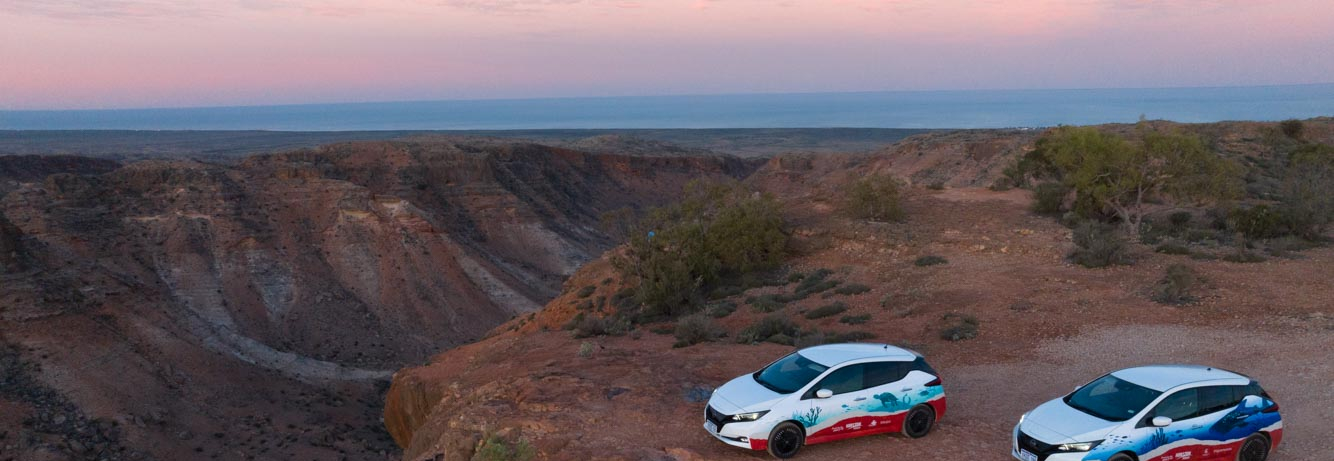

Having already proven effective in removing hosting capacity constraints so that more Horizon Power customers in regional WA can access rooftop solar, our Distributed Energy Resource Management System (DERMS) is now proving capable of supporting future EV integration at scale.
How it worked
Four partner organisations installed V2G DERMS connected chargers for the 12 month trial. They used these chargers with five Nissan Leaf EVs that had a range of up to 400km.
Ready to go
Only spare EV battery energy was used to power homes or export to the grid. EVs remained ready to commute to work or drive for fun.
Power your home
Energy discharged from the EV battery powered household appliances such as the TV and air-conditioning.
Export to grid
The EV batteries could also export excess energy back to the grid. Horizon Power could use this energy to help support network stability.

About the trial
The trial was the first of its kind in Western Australia, as part of the WA Government's Electric Vehicle Action Plan. It explored how electric vehicles could not only draw energy from the grid but also feed it back into the network through our Distributed Energy Resource Management System (DERMS).
What we learnt was it’s possible to embrace renewable energy while keeping our networks balanced to meet supply and demand. Through DERMS we were able to manage supply and demand more efficiently — showing how smart tech and EVs can work together to support a cleaner, more resilient energy future.
The EVs on the road
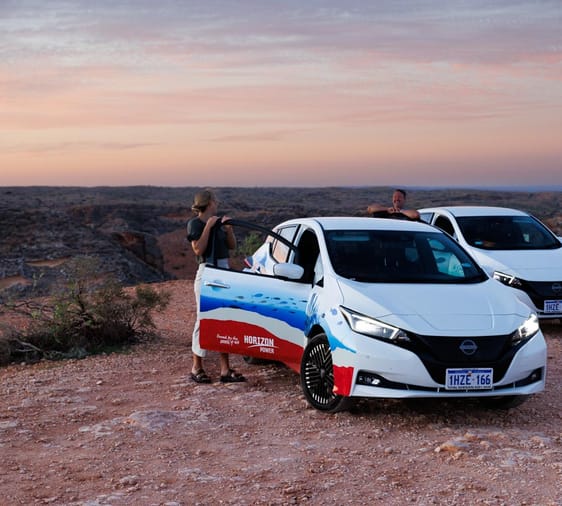
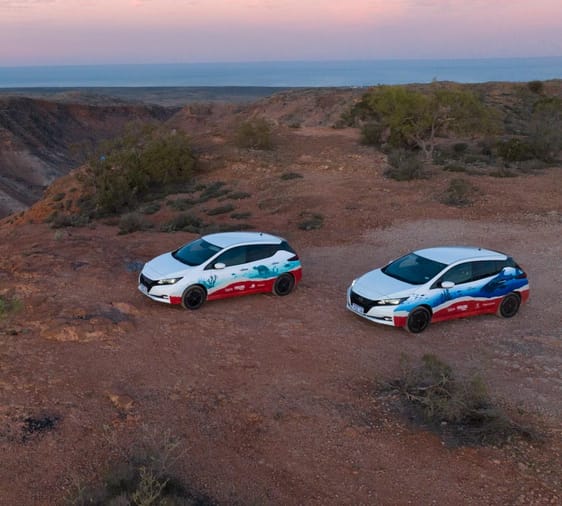
We gave each EV a unique look and traditional Thalanyji name.

Bundegi
Bundegi is the beach near the radio towers north of Exmouth.

Padjari Manu
Padjari Manu is the name for Vlamingh Head.

Pilgramunna
Pilgramunna encompasses concepts of the sea and connection to coastal resources.

Majun
Majun is the name for sea Turtle.

Wobiri
Wobiri is a popular surfing beach in Exmouth.
Feedback and insights
Feedback from our trial partners has been extremely positive. Many had never driven an electric vehicle before, so it was exciting to hear how much they enjoyed the experience, including the smooth driving to fuel cost savings. One partner even reported driving over 12,000km’s on WA roads throughout the trial.
The trial has allowed us to learn about regional sentiment, opportunities and obstacles to choosing to drive an EV, and explore the impacts that charging, driving and orchestration of these resources can have on our customers.
The Nissan Leaf EVs were a hit across Exmouth and the Gascoyne region, giving our partners a first-hand look at how EVs can fit into everyday life. As Amanda Willmott from the Gascoyne Development Commission put it:
"For small communities like [ours] to be doing something so progressive, that's incredible."
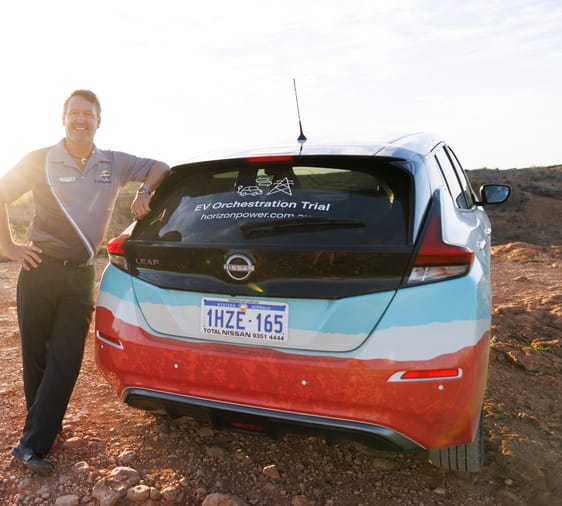
Pictured: Shire of Exmouth President, Matthew Niikkula with one of the Nissan Leaf EVs.
DERMS has already proven effective in removing hosting capacity constraints so that more Horizon Power customers in regional Western Australia can access rooftop solar. With the success of this trial we’ve learned that DERMS is now proving capable of supporting the connection of more solar and other renewable energy resources such as batteries and EVs.
The success of this V2G trial shows that our DERMS system can safely support EV integration at scale — creating exciting opportunities for cleaner energy and cost savings for our customers.
Insights from this trial will help shape future initiatives and support our customer-led energy transition.
Driving forward
This trial marks an important step towards the increased uptake of electric vehicles in WA, showcasing how customers can benefit while helping to support the broader energy system.
WA’s energy landscape is unique, especially across our remote and regional communities. That’s why we’re focused on developing smart, flexible solutions that meet local needs while aligning with national standards wherever possible.
By continuing to innovate and collaborate, we’re helping to shape a cleaner, more resilient energy future — one that puts customers at the heart of the energy transition.
Frequently Asked Questions
DERMS stands for Distributed Energy Resource Management System. This is an internet-based system we use to manage energy generated from solar and energy flows across other customer energy resources (CER). DERMS allows us to smooth energy fluctuations across our systems to keep a reliable supply.
A virtual power plant brings together a range of energy assets to work together and provide services to an energy system. These assets can include batteries, solar PV systems and other energy resources.
Exmouth was selected as the location for this trial for a range of reasons, including its climate, the power system load and conditions, and its overall readiness to adopt Distributed Energy Resource Management System (DERMS) technology.
The town demonstrated a strong community interest in sustainable initiatives, making it an ideal candidate for innovative energy solutions. Additionally, Exmouth experiences a high volume of seasonal tourism, which introduces unique and fluctuating energy demand challenges.
These variations in load—driven by peak visitor periods—provided a dynamic environment to test the capabilities of DERMS technology, particularly in the context of Vehicle-to-Grid (V2G) integration.

Horizon Power acknowledges the Traditional Custodians throughout Western Australia and their continuing connection to the land, waters and community. We pay our respects to all members of the Aboriginal communities and their cultures; and to Elders past, present and emerging.
Aboriginal and Torres Strait Islander people are advised that this website may contain images, names or voices of deceased people.