
Power outages can be disruptive and they sometimes happen without notice.
Find out why outages happen and what we do behind the scenes to get your power back on as quickly - and safely - as possible.
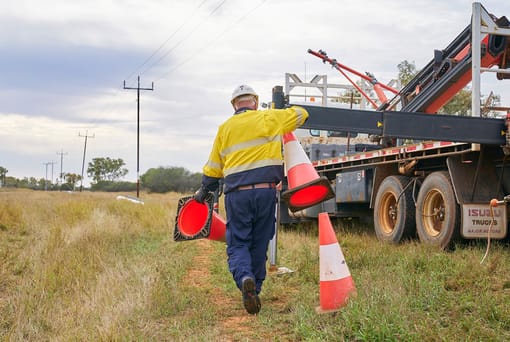
We do everything we can to keep the power on – but sometimes planned power interruptions and unplanned power outages will happen.
Learn some of the reasons why we have outages.
Find out why outages happen and what we do behind the scenes to get your power back on as quickly - and safely - as possible.
Sometimes, we need to turn the power off to your home or business so our team can work safely on maintenance, repairs or upgrades to parts of the network. When we know in advance and can let you know, this is known as a planned power outage.
If we need to cancel a planned outage because of extreme weather or other network priorities, we’ll try to let you know if that’s the case.
At least three days before the planned outage, we will let you know through phone, email or SMS.
We’ll post the power outage information on our website and Horizon Power mobile app. On the day, the details will also appear on our outage finder.
We’ll let you know the dates and times your power could be off, including the estimated power restoration time, so you can plan ahead.
Unexpected power outages can happen because of damage to electrical infrastructure such as our poles and wires, extreme weather, vandalism, falling trees or branches, animals or other objects coming into contact with power poles or wires, and emergency situations.
If your power goes out unexpectedly, visit the outage finder on our website or download the Horizon Power mobile app to get the most up-to-date information. This will include an estimated power restoration time.
You can also phone our 24-hour Horizon Power fault line on 13 23 51.
No matter when a fault occurs, our local response team will be notified.
Sometimes, our team can get the power back on quickly by working remotely.
There will often be times that we need to inspect the network to do a damage inspection, find the fault and fix the issue before the power can be switched back on.
Our network covers millions of square kilometres – and sometimes our team need to travel to different locations to inspect and repair damage to electrical assets. This can take time, especially during extreme weather events when there might be delays or restrictions getting to the areas we need to visit. This is why restoring power to some regional areas can take longer than others.
Our first priority in any power outage is safety. When we respond to any notifications of faults and outages, the first step is to make sure the site is safe for our crews and for the community.
We’ll then check the damage and prioritise the order of repairs. We want to restore power to the highest number of customers as soon as possible, and, of course, our essential health and community services.
Once the issue has been repaired, this is the usual order of our power restoration process (and some of these can happen at the same time):
In an unplanned outage, we work hard to work out the issue as quickly as possible so we can update you with the most accurate information. As soon as we can, we’ll share an estimated power restoration time on our website and mobile app.
We know it’s frustrating when the power goes out unexpectedly, especially if your power restoration time changes or isn’t specific enough.
It can be hard to estimate a restoration time for a town or suburb when the power might be restored for different customers at different times. Sometimes, a number of powerlines can be impacted by an outage but these might not be interconnected. For example, sometimes some customers will have their power back before other houses or business on the same street or in the same neighbourhood. If your power has gone out, we appreciate your patience and want you to know that our teams are always doing their best to get your power back on.
Depending on the cause of the outage and number of faults affecting the network at that time, the power can come back to individual homes and businesses at different times.
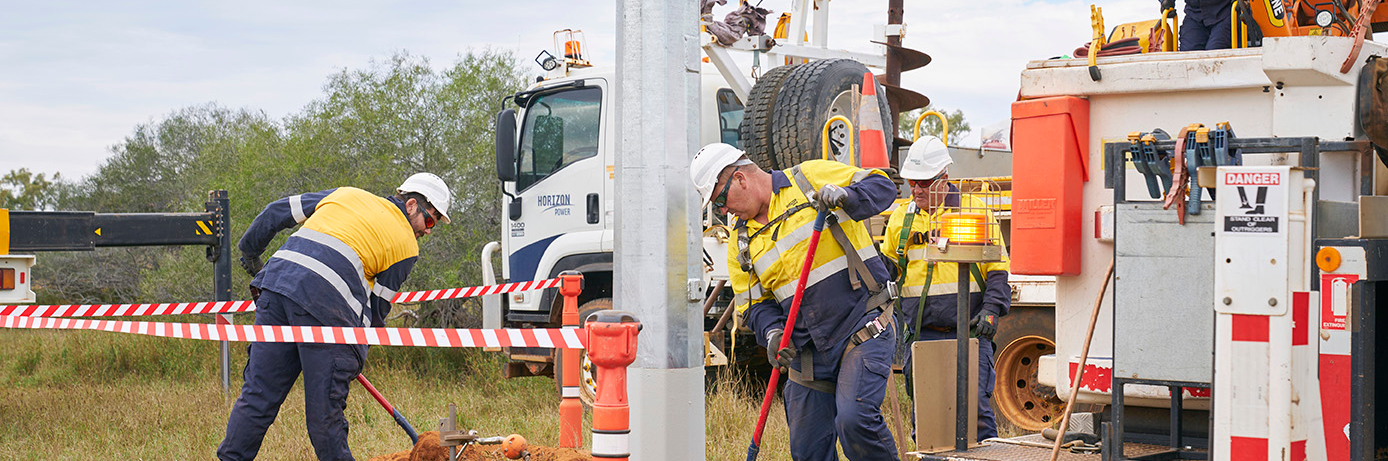
Horizon Power acknowledges the Traditional Custodians throughout Western Australia and their continuing connection to the land, waters and community. We pay our respects to all members of the Aboriginal communities and their cultures; and to Elders past, present and emerging.
Aboriginal and Torres Strait Islander people are advised that this website may contain images, names or voices of deceased people.