Solar 101
When you invest in rooftop solar for your home, your system will generate energy during the sunniest parts of the day. Depending on the size of your system and your energy use, you may produce more energy than your home needs during those times.
How rooftop solar works
Rooftop solar systems convert sunlight into energy that can be used to power your property.
If you don't use all of the solar power you generate (and you don't have a battery to store it), the excess energy goes back into the grid.
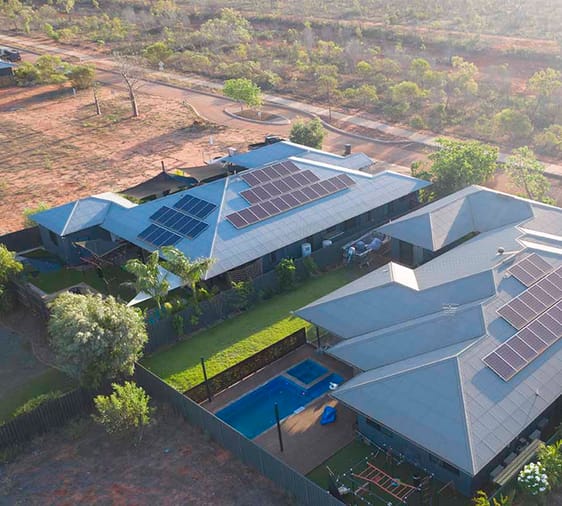
Life in regional WA means planning for all kinds of conditions
Hot summer nights, storms, and changing seasons. It's important you choose a solar system from a trusted brand - suited to these harsh weather conditions.
Factors that affect how much solar your panels generate
Your panels do their best work with clear skies and clean panels
Any obstruction from debris, cloud cover or shade - will reduce their performance. Consider the maintenance features of different makes and models, trees and other obstructions that could get in the way of the sun.
Panels tend to perform their best angled north
But east and west will work as well, with a tilt of at least 10 degrees. If your roof slope is more flat than stacked, your installer can offer options to optimise your panel orientation for optimal energy making.
Go the distance with quality and warranty over cost
A good brand will offer a 25 year product and performance warranty (or longer). This means their panels are free from defects and should maintan a certain level of power output over the warranty period.
Top tips for choosing the right solar inverter
Higher efficiency equals better energy output
The quality of the solar inverter you choose will determine how efficient it will be. Check the efficiency rating when comparing systems. For example, a system with 98% efficiency rating, will convert almost all of the solar energy generated by your panels into free energy for you to use.
Accept nothing less than a 10 year commitment
A reputable inverter brand is in it for the long haul and will provide a warranty of atleast 10 years or more. Look for models with strong, local support and a good reputation in our warmer climate. A reliable inverter will mean less maintenance and issues down the track.
Compatible with Smart Connect Solar
Your chosen inverter will be smart connected to our network - and compatible with our Secure Gateway Device. This makes it easier for you to choose the right inverter, as our list of compatible models includes some of the most highly rated. And also recommended by the Clean Energy Council!
Learn more about the WA Residential Battery Rebate scheme
Check if you’re eligible for the WA Residential Battery Scheme. You could get a rebate towards the cost of a battery, or access to no-interest finance.
Horizon Power acknowledges the Traditional Custodians throughout Western Australia and their continuing connection to the land, waters and community. We pay our respects to all members of the Aboriginal communities and their cultures; and to Elders past, present and emerging.
Aboriginal and Torres Strait Islander people are advised that this website may contain images, names or voices of deceased people.